The Five-Minute Job
Have you ever looked at a small project and said, “Easy. Five minutes and I’m done!” Then, with relative normalcy, the project turns into a convoluted, perseverance-testing, multi-houred project? Conversely, have you ever put off a project because you feared it was going to be difficult and time consuming—then bam! Five minutes and you’re done?
I have come to the conclusion that I live in a world of five-minute projects.
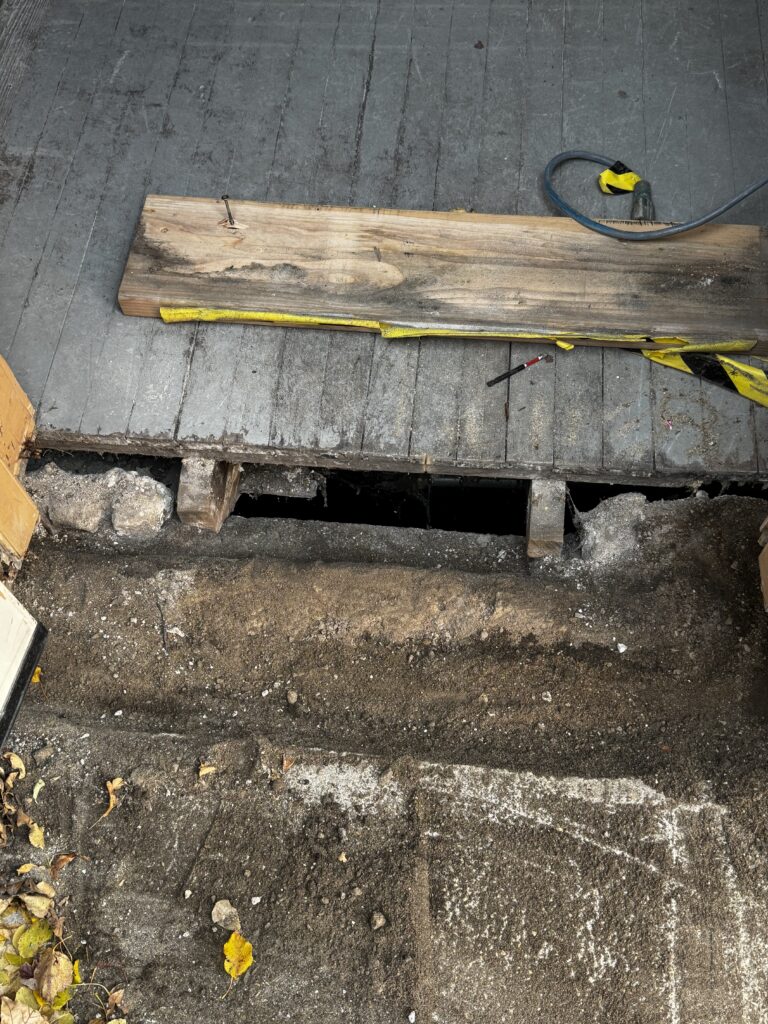
A week ago, I was straightening some building material remnants in our ministry center. I looked at a piece of Sheetrock and realized that that particular piece would fit in a spot which had recently become a focus of my attention. I thought, “Easy. Five minutes and done!” A piece of building material will be gone, and another spot will be restored in the building. I trimmed the piece to fit and went to place it in the tight corner…and it didn’t sit nicely. There was an old piece of plaster in the way. I pulled the old piece of plaster out of the way, then realized that the adjacent plaster was also a problem. I grabbed a couple of more tools, and cleaned off the eight-inch piece of plaster from the floor to the top of the door. I pulled some old nails, got plaster dust in my face, went to get the trash can, vacuum, broom, dustpan, and another tool. Soon enough the corner was clean, and I tried to slide the Sheetrock in. It was a perfect fit…until I tried to slide it behind the step that sits at 90 degrees to the Sheetrock’s location. I had half an inch of clearance, but I needed more. The Sheetrock was 5/8 of an inch. So I went and got another tool. I trimmed the step just over what I needed, to leave a bit of space, and finally, the Sheetrock slid into place like it was meant to be.
Two hours after I started the five-minute project, I was finally done.
The piece of Sheetrock had been sitting there for a month or two. The corner I repaired had been ready to be repaired for three or four months; it just was not a point of concern yet. When it was finally time, and I thought I had the time, I completed the project. Just not quite like I had thought.
So what’s my point besides telling you a little of what it’s like to restore an old building?
Sometimes things are just exactly what you think. Simple or complex, in your experience you can do the thing in “five minutes.” Sometimes however, the five-minute thing is not what you expected. It takes more work to prepare in order to finish. You have to sanctify, clean, rebuild, replace, restore, find another tool, clean up a mess, chip out some old problem, and get more material—just to finish the five-minute project.
This old building, Fallout Shelter Ministries home base, is a testimony to the work of God. It’s a physical example of God’s sanctification. We often look at something or someone and think that they could use some work, some healing, some restoration. People are often a lot like old buildings. The work of sanctification isn’t just throwing a fresh coat of paint on, it’s getting into the bones; cleaning out years of dirt, dust, and debris; fixing the rot; reinforcing the framework; finding the right tool to make the work go smoothly; having the right skills to do the work; and taking the time to do it. The work of sanctification isn’t just a physical or mental exercise. We are spiritual beings, part of the unseen realm, and there is as much restoration needed there as there is in an old building.
The good thing—sanctification is not just a private endeavor. Real sanctification takes place after we place our trust in Christ Jesus. That is the decision to do the work, to start the process.
Once we commit to the work, we start with repentance. That is some heavy work, tearing open old hidden rooms, getting rid of the rot that is in us. It’s dirty work, it’s hard, sweaty work for most. It is full of fear as well. What if I get rid of that scar of sin that feels like it’s holding me together?
Simultaneously, we start working on forgiveness. Forgiving people for the hurt we have perceived, for the things we have latched on to and refused to let go of—this process sometimes turns into a five-minute project. “Oh, I don’t carry any hurt” are the common words I hear from folks. This is an easy five-minute project. Then when they start digging into the closets, they find the disease that unforgiveness is. Festering mold, rot, rodent droppings, insects, and more are just festering in the dark corners that we refuse to visit. We turn the sanctifying light on those places, and then the Holy Spirit can soften the work, allowing us to stomach the smell and do the work of forgiveness.
Repentance, forgiveness…and we are done right? What about childhood trauma, spiritual trauma we inflicted on ourselves, and more. What about the bitterness we keep in the basement, that stuff that affects our thought patterns, reactions, and responses? Well, that has to go too. That’s deep, hard cleaning—really scrubbing out the cracks and the dark corners, running an ozone machine for a while to purify the air. Seems a lot like getting deep into our relationship with God and praying. We start to practice a lifestyle of forgiveness and repentance, really working to change that habit of negative, self-centered thoughts in order to become kingdom-focused, more altruistic, humble, and following the great commandment to love God with our whole beings, and to love our neighbors.
It seems that owning a building, whether it’s a house or a shed, a skyscraper or a barn, the work never ends. Those five-minute projects are always there, waiting to be done. There is always something that needs to be repaired, repainted, or remodeled so it suits the current needs better. Just like a building, the work on ourselves—on our souls—never ends. We can be in a great place, and some subtle thing will distract us from our good purposes. A little dirt will get into a crack, or some moisture, and pretty soon it turns to mold. Mold turns to rot, rot turns to structural failure…it’s the same with us. A little distraction, then a little temptation, then sin, and ultimately separation from God’s purpose in our lives…
Buildings and souls—oddly similar in the need for consistent work and consistent upgrades. Intentional, purposeful work is required to maintain both. The great thing is that—if you are a disciple of Jesus—the Holy Spirit helps and inspires the repair, the great sanctification of our souls. He helps and inspires us to be more and more like Jesus. So, break out your tools. The hammers, nails, vacuum and brooms of spiritual growth—that is, the Bible, prayer, gathering with other believers, testing yourself to see growth of the fruit of the spirit, (Galatians 5:22-23), and allowing other believers to encourage us and call us from sin.
Following Jesus is certainly one of those five-minute projects. Looks pretty easy at first, finding that peace and joy, but the purposeful step of dying to yourself and becoming an intentional follower of the King of the universe is a challenge. It takes restorative work in our souls and real purpose in our hearts. Join me in the intentional work of Christianity. It’s a pretty great thing to see your friends restored. Just takes a few minutes.